A. B. Guthrie
A. B. Guthrie Jr. stands as one of the most significant voices in American Western literature, a writer who transformed the regional novel into something of genuine national importance. His sweeping historical fiction captures the grandeur and complexity of frontier life with a novelist’s eye for character and a historian’s respect for detail. Guthrie’s work is marked by an unflinching examination of westward expansion—the dreams it inspired, the communities it built, and the costs it exacted on both settlers and the landscape itself. His prose carries a distinctive quality of authenticity, rooted in his deep knowledge of Montana and the West, where he spent much of his life and set many of his most memorable works.
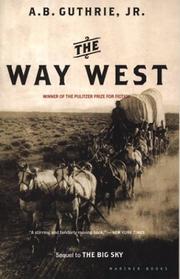
The publication of The Way West in 1949 brought Guthrie’s talents to national attention and earned him the Pulitzer Prize for Fiction in 1950, cementing his reputation as a major literary force. The novel traces an Oregon-bound wagon train across the frontier, weaving together multiple perspectives to create a panoramic portrait of American expansion. This recognition validated Guthrie’s approach to the Western novel—proving that serious literary merit and popular appeal need not be mutually exclusive. His Pulitzer win represented a watershed moment for frontier fiction, demonstrating that the American West deserved to be treated with the same artistic ambition and psychological depth as any other subject matter in contemporary letters.