A. R. Ammons
A. R. Ammons stands as one of American poetry’s most distinctive voices, a writer whose prolific output and formal innovation earned him recognition at the highest levels of literary achievement. His career trajectory itself tells a story of vindication—from relative obscurity in the 1950s to becoming a towering figure whose work reshaped what contemporary poetry could accomplish. Ammons’s verse is characterized by its paradoxical blend of accessibility and philosophical depth, moving fluidly between scientific observation and metaphysical inquiry, often within a single poem. His long lines, conversational tone, and willingness to embrace digression and fragmentation create a reading experience that feels simultaneously intimate and expansive.
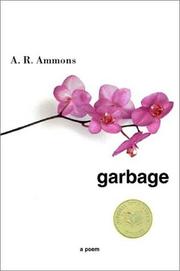
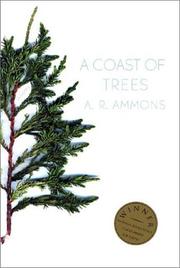
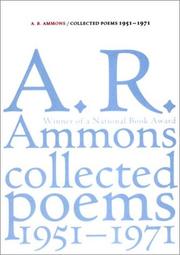
Ammons’s major award wins underscore his sustained excellence across three decades. His Collected Poems, 1951–1971 won the National Book Award in 1973, establishing him as a major figure just as he approached his peak creative years. A decade later, A Coast of Trees claimed the National Book Critics Circle Award in 1981, affirming his continued evolution. Perhaps most remarkably, at age 74, Ammons won his second National Book Award for Garbage in 1993—a book-length poem of startling ambition that takes refuse and waste as its subject matter and philosophical starting point, demonstrating that his powers remained undiminished in his final decades. This span of honors across different eras reveals an artist whose influence only deepened over time, whose formal experiments proved not momentary but foundational.