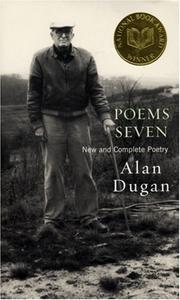
Alan Dugan
Alan Dugan stands as one of American literature’s most distinctive voices, a poet whose sparse, unflinching style and wry examination of ordinary life earned him extraordinary recognition early in his career. His 1962 debut collection Poems made an immediate impact, winning both the National Book Award and the Pulitzer Prize for Poetry in the same year—a remarkable double honor that announced the arrival of a major literary talent. Dugan’s gift lay in finding profound meaning in the mundane, crafting poems that scrutinized work, relationships, and the small indignities of daily existence with equal parts humor and gravity, refusing easy sentiment or consolation.
Throughout a long and productive career, Dugan maintained the rigorous standards that defined his early success, never compromising his austere aesthetic or his commitment to honest observation. Nearly four decades after his debut, the literary establishment affirmed his sustained achievement when Poems Seven: New and Complete Poetry won the National Book Award in 2001, cementing his place among the most important American poets of the late twentieth century. His recognition across decades underscores the enduring power of his work—poetry that speaks to readers not through ornamentation or emotional excess, but through clarity, intelligence, and an unflinching attention to how we actually live.