Alan Taylor
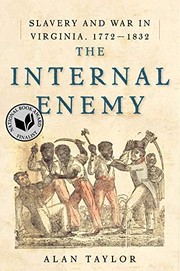
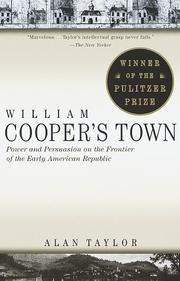
Alan Taylor stands as one of the preeminent historians of early America, a scholar whose work consistently challenges conventional narratives about the nation’s founding era. With two Pulitzer Prizes for History to his name, Taylor has demonstrated a rare ability to excavate forgotten stories from American archives and reconstruct them with both scholarly rigor and narrative power. His recognition across decades—winning for William Cooper’s Town: Power and Persuasion on the Frontier of the Early American Republic in 1996 and again for The Internal Enemy: Slavery and War in Virginia, 1772-1832 in 2014—underscores his enduring influence in reshaping how we understand this pivotal period.
Taylor’s distinctive approach centers on recovering the voices and experiences of ordinary people caught in the transformative upheaval of the late eighteenth and early nineteenth centuries. Rather than focusing narrowly on the revolutionary elite, he examines how frontier settlers, enslaved individuals, and rural communities navigated the messy realities of nation-building. His work is marked by meticulous research, sophisticated analysis of competing interests, and a willingness to complicate straightforward patriotic narratives. Whether tracing the rise and fall of a frontier town or exposing how enslaved people’s resistance shaped Virginia’s wartime politics, Taylor reveals the contingency and contested nature of American independence—showing that the republic’s founding was far messier and more contested than traditional histories suggest.