Albert Hackett and Frances Goodrich
Albert Hackett and Frances Goodrich were among the most accomplished and versatile writing partnerships of the twentieth century. Working as husband-and-wife collaborators, they crafted screenplays and stage plays that ranged from sophisticated comedies to deeply humanistic dramas, consistently demonstrating a gift for capturing authentic emotion within carefully constructed narratives. Their career spanned decades and multiple mediums, earning them recognition as craftspeople who understood both the technical demands of their chosen forms and the subtle psychological complexities of their characters.
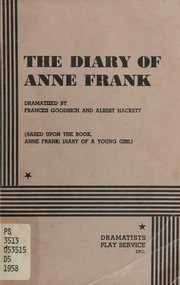
The pair achieved their most enduring legacy with The Diary of Anne Frank, the stage adaptation of the Holocaust memoir that won the 1956 Pulitzer Prize for Drama. Their dramatization transformed Anne Frank’s personal journals into a work of profound theatrical power, finding in her words a story of adolescent hope and human resilience even in the darkest historical circumstances. The play became a landmark of American theater—a testament to Hackett and Goodrich’s ability to honor source material while creating something that could move audiences across generations. Their success with The Diary of Anne Frank cemented their reputation as writers capable of tackling material of historical and moral weight without sacrificing the intimate character work that made their scripts resonate with audiences.