Allen Drury
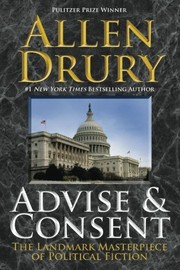
Allen Drury stands as one of the most significant political novelists in American letters, a writer who understood Washington’s corridors of power not as an outsider peering in but as someone who had walked them himself. His journalism career gave him an insider’s knowledge of how government actually functions—the backroom negotiations, the personal rivalries, the moral compromises—which he channeled into fiction that reads with the authority of lived experience. His debut novel, Advise and Consent, became a landmark achievement in 1960 when it won the Pulitzer Prize for Fiction, establishing Drury as the preeminent chronicler of political intrigue and ambition at the highest levels.
Advise and Consent remains a masterwork of the political novel genre, a sweeping narrative that explores the confirmation battles and personal dramas surrounding a controversial secretary of state nominee. What distinguishes Drury’s approach is his refusal to reduce his characters to ideological positions; his senators, diplomats, and power brokers are complex individuals driven by principle, fear, loyalty, and desire in equal measure. The novel’s success lay partly in its timeliness—published during the Cold War when anxieties about national security and political loyalty ran high—but its enduring appeal comes from Drury’s fundamental insight that political decisions are ultimately human decisions, fraught with personal consequence.
Beyond Advise and Consent, Drury would continue mining the terrain of American politics through multiple sequels and standalone works, cementing his reputation as a novelist who could make the machinery of government as gripping as any thriller. His literary legacy rests on the conviction that fiction about politics need not sacrifice complexity or artistry for accessibility, and that the personal lives of powerful people deserve the same psychological depth that literary fiction lavishes on everyone else.