Andrew C. McLaughlin
Andrew C. McLaughlin stands as one of the early twentieth century’s most influential historians of American constitutional thought. His scholarly career was defined by a commitment to tracing the intellectual and legal foundations of American governance, approaching constitutional history not as a dry catalog of dates and doctrines but as a living narrative shaped by evolving ideas about democracy, federalism, and individual rights. McLaughlin’s work earned him recognition as a authoritative voice in a field that was still developing its critical methodologies during his most productive years.
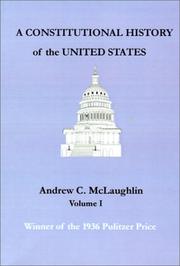
His magnum opus, A Constitutional History of the United States, secured his place in the American historical canon when it won the Pulitzer Prize for History in 1936. The work exemplified McLaughlin’s analytical approach: tracing constitutional principles back to their colonial and European origins, examining how they were tested and refined through founding documents and early governance, and demonstrating how the Constitution itself was a product of centuries of legal and political thought rather than an isolated creation. This sweeping perspective, combined with his clarity of expression, made the book accessible to both scholarly and general readers—a rare achievement that helps explain its enduring influence.
The Pulitzer recognition validated what many of his peers already recognized: that McLaughlin had produced a foundational text for understanding how America’s legal framework developed and why certain constitutional principles gained precedence over others. His work continues to influence how historians and legal scholars approach questions about constitutional intent and evolution.