Anne Applebaum
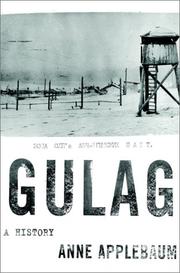
Anne Applebaum has established herself as one of the most incisive historians of twentieth-century totalitarianism, bringing rigorous scholarship and narrative vitality to subjects that demand both intellectual precision and moral clarity. Her magnum opus, Gulag: A History, earned her the 2004 Pulitzer Prize for General Nonfiction, a recognition that reflected the book’s groundbreaking synthesis of archival research, survivor testimony, and geopolitical analysis. The work fundamentally reshaped how English-language readers understood the Soviet labor camp system—not as a monolithic horror, but as an evolving instrument of state terror whose mechanisms and victims shifted across decades and geographies.
Applebaum’s distinction lies in her refusal to treat history as mere chronicle. Her writing combines the accessibility of a gifted storyteller with the methodological rigor of a trained scholar, making complex Cold War politics and Eastern European history legible to general readers without sacrificing nuance. Whether examining the history of Soviet punishment or the broader collapse of communist systems, she demonstrates how personal stories illuminate structural forces, and how understanding the past demands both empathy and unflinching analysis. Her Pulitzer recognition underscored what readers and historians already knew: that she had produced not just an important book, but an essential one—a work that redefined the terms by which we discuss state violence and its human consequences.