Annette Gordon-Reed
Annette Gordon-Reed stands as one of the most influential historians of her generation, fundamentally reshaping how Americans understand the founding era and the lives of enslaved people at its center. Her scholarship is marked by meticulous archival research, narrative grace, and an unwavering commitment to centering voices that traditional histories had marginalized or erased entirely. Gordon-Reed brings the rigor of legal training—she was a lawyer before transitioning to full-time scholarship—to her historical work, approaching contested claims with the precision of cross-examination while never losing sight of the human dimensions of history.
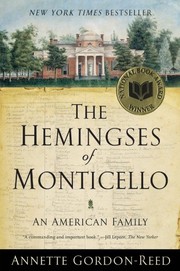
Her landmark work The Hemingses of Monticello: An American Family exemplifies this distinctive approach. Published in 2009, the book won the Pulitzer Prize in History, cementing Gordon-Reed’s reputation as a transformative voice in the field. The work traces the extraordinary saga of the Hemings family—enslaved people at Thomas Jefferson’s Monticello—across generations, weaving together personal narrative with political history to create an account that restores agency and complexity to lives too often treated as historical footnotes. The Pulitzer recognition acknowledged not just the book’s scholarly importance but its power to reframe fundamental American narratives.
Beyond the accolades, Gordon-Reed’s influence lies in her method: she insists that rigorous history requires us to listen to the testimony of enslaved people, to trust documents, and to follow evidence wherever it leads, even when it complicates the stories we’ve been told. Her work has opened new pathways for historical inquiry and inspired a generation of scholars to reckon honestly with America’s past.