Archibald MacLeish
Archibald MacLeish stands as one of the twentieth century’s most versatile and honored American writers, a poet and dramatist whose work grappled with the nation’s pivotal moments and timeless human struggles. His career spanned decades of extraordinary productivity, moving fluidly between lyric poetry, verse drama, and public service—he served as Librarian of Congress and Assistant Secretary of State—giving his writing an urgent engagement with history and power. MacLeish’s distinctive style blended modernist innovation with an accessible lyricism, and his recurring preoccupations with democracy, myth, and moral responsibility resonated across generations of readers and audiences.
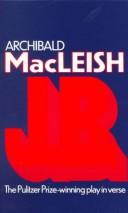
His award record testifies to the breadth and depth of his literary achievement. MacLeish won the Pulitzer Prize for Poetry twice: first in 1933 for Conquistador, his ambitious narrative poem exploring the Spanish conquest of Mexico, and again two decades later in 1953 for his Collected Poems, 1917–1952. That same year, the same volume earned him the National Book Award for Poetry, a rare double honor that acknowledged both the retrospective power of his life’s work and his continued artistic vitality in mid-career. His final major recognition came in 1959 when his verse drama J. B., a modern retelling of the Book of Job set in a contemporary circus, won the Pulitzer Prize for Drama—a signal achievement that demonstrated his mastery across literary forms.