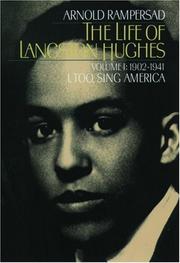
Arnold Rampersad
Arnold Rampersad stands as one of America’s most consequential literary biographers, with a career devoted to recovering and illuminating the lives of African American writers who shaped the nation’s cultural landscape. His scholarly approach combines meticulous archival research with a gift for narrative that brings historical figures vividly to life. Rampersad’s work demonstrates a conviction that literary biography, when done with rigor and empathy, can serve as a form of cultural recovery—restoring complexity and dignity to lives that have been flattened by time or misrepresented by earlier accounts.
His landmark work, The Life of Langston Hughes, Vol. I: 1902-1941, stands as a testament to both his scholarly ambitions and his ability to achieve widespread recognition across the literary establishment. The biography made history by winning the National Book Critics Circle Award in two categories—Biography and Autobiography—in 1986, an extraordinary dual honor that underscores how seamlessly Rampersad wove Hughes’s own reflections and writings into a deeply personal yet historically comprehensive portrait. Rather than treating biography as a straightforward recitation of facts, Rampersad crafted a narrative that captures Hughes in all his contradictions: the celebrated poet and activist, but also the vulnerable man navigating questions of identity, belonging, and artistic integrity during the early twentieth century.
This achievement established Rampersad as an essential figure in African American literary studies, one whose biographical work has fundamentally shaped how we understand some of the twentieth century’s most vital creative voices.