Bernard Bailyn
Bernard Bailyn stands as one of the most influential historians of the American Revolution and early American history, a scholar whose work fundamentally reshaped how we understand the intellectual and social foundations of the nation’s founding. His distinctive approach combines rigorous archival research with compelling narrative prose, allowing him to excavate the ideological motivations and human experiences that animated the revolutionary era. Bailyn’s recurring focus on the relationship between intellectual history and lived experience—how ideas moved through communities and transformed ordinary people’s understanding of liberty, rights, and governance—has made his work essential reading for anyone seeking to grasp American history beyond its standard myths.
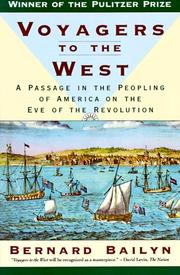
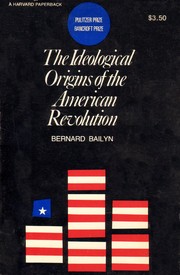
The dual recognition Bailyn received from the Pulitzer Prize committee underscores the breadth of his scholarly reach and the enduring significance of his contributions. His first Pulitzer Prize in 1968 honored The Ideological Origins of the American Revolution, a groundbreaking work that traced how colonial thinkers synthesized classical republican theory, English legal traditions, and Enlightenment philosophy to justify their rebellion. Nearly two decades later, he claimed a second Pulitzer in 1987 for Voyagers to the West: A Passage in the Peopling of America on the Eve of the Revolution, which shifted focus from ideological abstractions to the actual human migrations and demographic patterns that shaped the revolutionary moment. This remarkable two-time recognition across different dimensions of early American history reflects Bailyn’s unique ability to open new interpretive frameworks and questions that other historians continue to explore and debate.