Bonnie Burnard
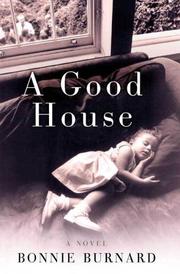
Bonnie Burnard’s A Good House stands as a masterwork of domestic realism, the kind of novel that finds profound meaning in the everyday rhythms of family life. Her 1999 Giller Prize win for this multigenerational saga cemented her reputation as a writer of remarkable insight into how ordinary people navigate love, loss, and the unspoken currents that shape households. Through decades spent observing the inner lives of her characters, Burnard discovered that the most compelling dramas often unfold not in moments of crisis, but in the quiet spaces between conversations—a kitchen table, a bedroom door left ajar, the weight of what remains unsaid.
What distinguishes Burnard’s work is her ability to render family dynamics with neither sentimentality nor cynicism, but with the clear-eyed compassion of someone who understands that people are rarely heroes or villains in their own homes, just complicated beings doing their imperfect best. Her prose has the clarity of someone writing with deep roots in the Canadian landscape, and her characters possess the specificity that comes from genuine attention to how real people speak, think, and endure. The recognition A Good House received on the national stage reflected not just the novel’s excellence, but Burnard’s standing as an essential voice in Canadian fiction—one who has spent her career proving that the domestic sphere, when examined with sufficient care and intelligence, contains all the complexity and beauty that literature can ask for.