C. K. Williams
C. K. Williams stands as one of the most significant American poets of the late twentieth and early twenty-first centuries, a writer whose work combines philosophical rigor with an almost confessional intimacy. His distinctive style—characterized by long, sinuous lines that seem to mirror the cadence of human thought itself—creates a meditative space where personal experience and broader moral questions intertwine. Williams’s recurring preoccupations with aging, desire, memory, and the ethical dimensions of everyday life give his poetry a profound humanity that resonates across decades. His vocabulary ranges from the colloquial to the formally precise, and he demonstrates an unusual ability to locate moments of grace within the mundane struggles of human existence.
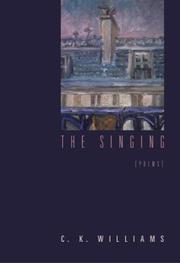
The arc of Williams’s major award wins reveals a poet of sustained excellence and deepening artistic vision. His breakthrough came with the 1987 National Book Critics Circle Award for Flesh and Blood, which established him as a vital voice in contemporary poetry. Over a decade later, he achieved the medium’s highest honor when Repair won the 2000 Pulitzer Prize for Poetry, cementing his place among America’s most accomplished poets. His recognition continued with the 2003 National Book Award for Poetry for The Singing, making him one of the rare poets to achieve such prestigious cross-award recognition. This remarkable trajectory speaks not to fashionable trends but to a body of work that deepens and refines itself with each collection, earning the respect of critics and readers alike.
-
-
Repair
-