C. Vann Woodward
C. Vann Woodward stands as one of the twentieth century’s most influential American historians, a scholar whose work fundamentally reshaped how we understand the American South and, by extension, the nation itself. His career spanned nearly seven decades, during which he challenged prevailing historical narratives with meticulous research and graceful prose that made complex regional history accessible to general readers. Woodward’s particular genius lay in his ability to excavate the human dimensions of history—the contradictions, ironies, and moral complexities that statistics and grand narratives often obscure.
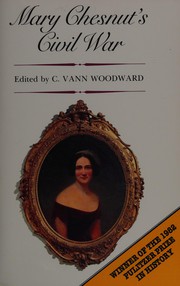
His masterwork, Mary Chesnut’s Civil War, earned the 1982 Pulitzer Prize for History, cementing his legacy as both a rigorous historian and a brilliant editor. The work represents a stunning achievement: Woodward took the previously unpublished Civil War diary of a South Carolina plantation woman and, through meticulous annotation and contextualization, transformed it into an essential primary source that gave voice to a perspective often marginalized in historical accounts. The Pulitzer recognition acknowledged not only Woodward’s editorial acumen but also his commitment to recovering overlooked histories and challenging conventional wisdom about the South’s past.
Throughout his career, Woodward examined the South’s relationship to race, Reconstruction, and national identity with unflinching honesty. He was never content with comfortable myths, whether about the Lost Cause or about progress, and his influence extended far beyond academic circles to shape public understanding of American history itself.