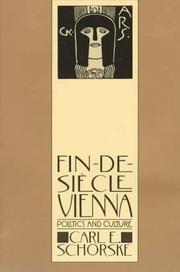
Carl E. Schorske
Carl E. Schorske stands as one of the most influential intellectual historians of the twentieth century, a scholar whose work fundamentally reshaped how we understand the cultural ferment of late imperial Europe. His magnum opus, Fin-De Siècle Vienna: Politics and Culture, earned the Pulitzer Prize for General Nonfiction in 1981, cementing a reputation built on his ability to weave together political history, art history, psychology, and music into richly textured cultural narratives. The book’s triumph on the Pulitzer stage reflected the broader scholarly community’s recognition that Schorske had accomplished something rare: he had written a work of genuine erudition that remained accessible and compulsively readable, transforming Vienna’s turn-of-the-century world into a lens through which to view modernism itself.
What distinguishes Schorske’s approach is his conviction that artistic and intellectual movements cannot be understood apart from their political contexts—yet he never reduces culture to mere ideology. In Fin-De Siècle Vienna, he traces how the crisis of liberal politics in the Austro-Hungarian Empire gave rise to the revolutionary aesthetics of figures like Gustav Klimt, Sigmund Freud, and Arnold Schoenberg. Rather than treating these creators in isolation, Schorske examines how each responded to the same historical pressures, finding in modernism both an escape from politics and a profound engagement with it. His work demonstrated that history itself could be written as a form of intellectual discovery, combining the rigor of scholarship with the narrative power of storytelling—a model that has influenced generations of historians working at the intersection of culture and politics.