Carl Sagan
Carl Sagan stands as one of the most influential science communicators of the twentieth century, a figure who fundamentally transformed how millions of people understand their place in the cosmos. With a career spanning astrophysics, philosophy, and literature, Sagan possessed a rare gift: the ability to translate the profound mysteries of the universe into language that moved both the mind and the heart. His work consistently explored humanity’s relationship with the cosmos, the nature of intelligence, and the possibility of life beyond Earth—themes that would preoccupy him throughout his prolific career.
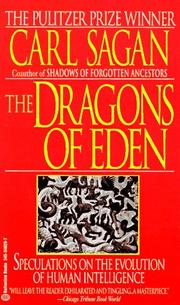
Sagan’s literary range earned him recognition across genres. His Pulitzer Prize-winning work, The Dragons of Eden, demonstrated his mastery of popular science writing, weaving together evolutionary biology, neuroscience, and philosophy to explain human consciousness and our evolutionary heritage. Years later, he ventured into fiction with Contact, a novel that seamlessly blended hard science with profound questions about faith, meaning, and humanity’s readiness to encounter the unknown. The novel’s success—honored as the best first novel by the Locus Awards in 1986—revealed that Sagan’s gifts extended beyond explanation into imaginative storytelling, allowing him to explore the same cosmic themes through narrative rather than exposition.
What made Sagan’s cross-genre recognition particularly remarkable was its consistency of vision. Whether writing as scientist or novelist, he maintained an unwavering commitment to elevating public understanding while never talking down to his audience. His influence extended far beyond awards, shaping how an entire generation imagined humanity’s future among the stars.