Carleton Mabee
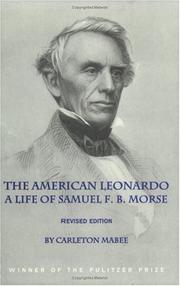
Carleton Mabee stands as a meticulous chronicler of American innovation and intellectual history, bringing forgotten figures and pivotal moments into sharp focus through his biographical work. His 1944 Pulitzer Prize-winning The American Leonardo: The Life of Samuel F. B. Morse exemplifies his gift for capturing not just the bare facts of a life, but the complex interplay between personal ambition, artistic vision, and technological breakthrough. In choosing Morse as his subject, Mabee recognized something that casual history often overlooks: the electromagnetic engineer and inventor was also a painter and visionary whose life embodied the restless curiosity of nineteenth-century America.
What distinguishes Mabee’s approach is his ability to resist reducing his subjects to single achievements or caricatures. Rather than presenting Morse merely as the man who invented the telegraph, Mabee traces the full arc of his ambitions, rivalries, and creative struggles. This depth of inquiry—treating biography not as triumphalist storytelling but as rigorous historical reconstruction—earned his work recognition during an era when biography was increasingly valued as serious literary and historical enterprise. Mabee’s Pulitzer Prize recognition underscored the growing belief that the best biography could equal the best history in its insights and equal the best literature in its narrative power.