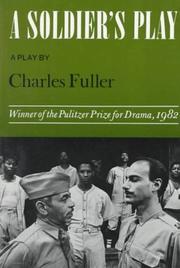
Charles Fuller
Charles Fuller stands as a pivotal figure in American theater whose unflinching examination of race, identity, and institutional power has fundamentally shaped contemporary drama. His magnum opus, A Soldier’s Play, earned him the Pulitzer Prize for Drama in 1982, a landmark recognition that validated Fuller’s bold approach to storytelling—one that refuses easy answers and demands audiences confront uncomfortable truths about systemic racism within American institutions. The play’s success on both stage and screen cemented Fuller’s reputation as a playwright capable of crafting narratives that are simultaneously deeply personal and urgently political.
What distinguishes Fuller’s work is his ability to construct intricate psychological dramas that operate on multiple levels, where individual conflicts become windows into larger social structures. A Soldier’s Play exemplifies this approach, unfolding as a murder investigation within a segregated military unit that ultimately interrogates the violence—both physical and psychological—embedded in American racism. Fuller’s dialogue crackles with authenticity, drawn from meticulous research and an deep understanding of how power dynamics shape human interaction.
Beyond the accolades, Fuller’s legacy rests on his commitment to telling stories that center Black experience and consciousness without apology or explanation. His work has influenced generations of playwrights and continues to be performed regularly in theaters nationwide, proving that urgent material, when crafted with Fuller’s skill and moral clarity, achieves the kind of enduring resonance that transcends its historical moment.