Charles Simic
Charles Simic stands as one of contemporary American poetry’s most distinctive voices, a writer whose work emerges from a restless imagination that finds profound meaning in the overlooked and ordinary. Born in Yugoslavia and shaped by the displacement of war and immigration, Simic brings a philosophical intensity to seemingly simple objects—a spoon, a wall, a stone—transforming them into gateways to larger truths about memory, loss, and human existence. His poetry combines surrealist imagery with an almost aphoristic clarity, creating work that feels both intellectually rigorous and deeply human.
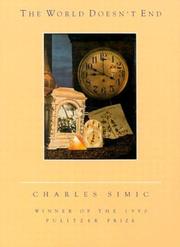
Simic’s 1990 Pulitzer Prize for Poetry, awarded for The World Doesn’t End, recognized his mastery of the prose poem form and his ability to compress wisdom and wonder into deceptively brief pieces. The collection exemplifies what makes his work resonate across decades: a refusal to settle for easy answers, paired with a wry, often darkly comic sensibility that keeps even his most meditative moments grounded in the real world. His recognition at poetry’s highest level affirmed what devoted readers had long known—that Simic’s distinctive voice, shaped by his transatlantic journey and philosophical temperament, speaks to something essential about how we make sense of fractured lives and fragmented times.