Charles Wright
Charles Wright stands as one of contemporary American poetry’s most distinctive voices, a writer whose work transforms the everyday landscape into a vehicle for spiritual and philosophical inquiry. With roots in the American South and a deep engagement with both Eastern philosophy and Western literary tradition, Wright has crafted a body of work that resists easy categorization while remaining profoundly moving in its exploration of memory, mortality, and transcendence. His distinctive style—marked by long, flowing lines, elaborate metaphors, and a meditative pacing—creates what feels like overheard prayer or confession, drawing readers into intimate communion with the poet’s consciousness.
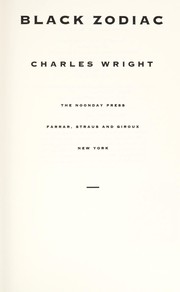
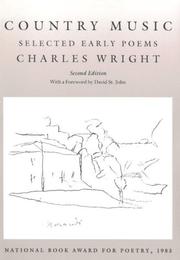
Wright’s major award recognition underscores the depth of his influence across the poetry establishment. His breakthrough came with the National Book Award for Country Music: Selected Early Poems in 1983, a collection that introduced readers to his lyrical excavation of Southern experience and landscape. But it was Black Zodiac, appearing in the mid-1990s, that cemented his status as a major voice—the collection earned both the National Book Critics Circle Award in 1997 and the Pulitzer Prize for Poetry in 1998, a rare double recognition that spoke to both critical and broader literary consensus. In these paired honors, Wright demonstrated his ability to reach across different segments of the poetry world while maintaining an uncompromising artistic vision rooted in linguistic precision and spiritual questioning.