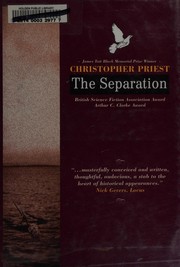
Christopher Priest
Christopher Priest stands as one of contemporary British science fiction’s most inventive voices, a writer whose intricate narratives collapse the boundaries between reality and illusion with surgical precision. His work is defined by an almost obsessive attention to the mechanics of deception—both the kind performed on stage and the more insidious varieties that shape perception itself. Priest’s prose tends toward the crystalline and controlled, a perfect vessel for the conceptual games and temporal loops that characterize his best fiction. What emerges across his career is an author fundamentally interested in how stories work, how we construct meaning from incomplete information, and what happens when the narrator can’t be trusted.
The dual recognition Priest has received from major award bodies speaks to the range and consistency of his vision. His 1996 World Fantasy Award for The Prestige cemented his reputation as a master of misdirection, a novel that uses the Victorian obsession with illusion to explore the cost of obsession itself. Seven years later, The Separation won the Arthur C. Clarke Award, demonstrating that Priest’s genius extended seamlessly into harder science fiction territory—in this case, an alternate history rooted in quantum mechanics that fractures into multiple, contradictory versions of World War II. That Priest could win genre recognition for such formally and thematically distinct works suggests something crucial about his talent: he doesn’t chase awards or trends, but rather deepens his philosophical preoccupations through whatever speculative framework best serves the story at hand.