Clifford D. Simak
Clifford D. Simak stands as one of science fiction’s great humanists, a writer who used the genre’s expansive possibilities to explore what it means to be human in an increasingly complex universe. Working across the golden age of pulp magazines and into science fiction’s maturation as serious literature, Simak developed a distinctive voice characterized by warmth, philosophical depth, and an almost pastoral sensibility that set him apart from his more hard-edged contemporaries. His recurring preoccupations—the relationship between humanity and technology, the value of ordinary lives set against cosmic scales, and the possibility of peaceful coexistence across vast differences—gave his work a timeless quality that transcended the era in which it was written.
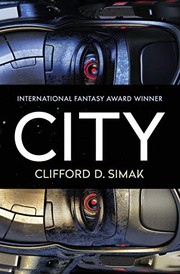
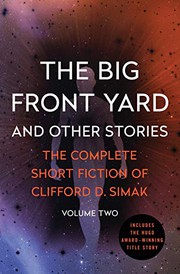
Simak’s sustained recognition across multiple decades and award categories testifies to the enduring power of his vision. He claimed his first Hugo Award in 1945 for City, a fix-up novel that would become his most celebrated work, establishing him as a major voice in the field. His ability to craft resonant novelettes earned him another Hugo in 1959 for The Big Front Yard, and in 1964 he won the Hugo for Best Novel with Here Gather the Stars (also published as Way Station), a deeply humanistic story that deepened his reputation for marrying intimate character work with big-idea science fiction. Later in his career, Simak demonstrated his undiminished craft with Grotto of the Dancing Deer, which won both the Nebula Award for Best Short Story in 1980 and the Hugo Award in 1981—a rare double win that underscored how thoroughly his work had earned the respect of both the science fiction community and a broader body of critics.
-
Here Gather the Stars (alt: Way Station)
-
-