Colson Whitehead
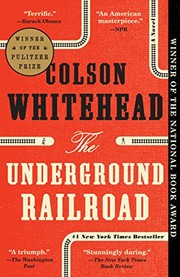
Colson Whitehead has established himself as one of contemporary American literature’s most fearless practitioners of historical fiction, wielding speculative and realistic modes alike to interrogate the nation’s deep moral reckoning with race and injustice. His breakthrough triumph came with The Underground Railroad, a novel that imaginatively reimagined the historical network as an actual subterranean railway system. The audacious concept—anchored by Whitehead’s precise, measured prose—resonated across the literary establishment in 2017, earning the Pulitzer Prize for Fiction, the Carnegie Medal, and even the Arthur C. Clarke Award, an unusual honor that underscores how his work transcends genre boundaries. This cross-award recognition signaled that Whitehead had achieved something rare: mainstream critical embrace without sacrificing intellectual rigor or formal innovation.
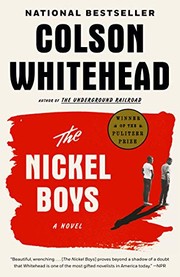
Whitehead doubled down on his exploration of America’s carceral and educational systems with The Nickel Boys, based on the true history of a brutally abusive reform school in Florida. The novel’s interwoven narratives and restrained emotional power captured another Pulitzer Prize for Fiction in 2020, along with the Kirkus Prize, cementing his status as a writer of profound moral consequence. What distinguishes Whitehead’s work across both books is his refusal to offer easy catharsis or redemption; instead, he excavates historical trauma with the precision of an archaeologist, letting structural innovation and authentic human detail do the emotional work. His recurring engagement with systems of control—whether literal or institutional—and his commitment to centering Black lives within American narratives have made him an essential voice for understanding the nation’s past and present.