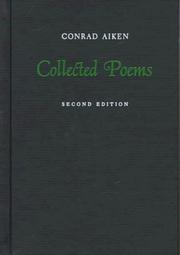
Conrad Aiken
Conrad Aiken stands as one of the most intellectually ambitious American poets of the twentieth century, a writer whose work bridges the gap between high modernism and lyrical accessibility. His poetry is marked by a fascination with psychological depth and musical complexity, drawing inspiration from his training in philosophy and his deep engagement with Freudian thought. Aiken’s exploration of consciousness, memory, and the interior landscape of human experience gave his work a distinctly modern sensibility while maintaining a lyrical beauty that distinguished him from more austere contemporaries.
Recognition came throughout his distinguished career, culminating in the 1930 Pulitzer Prize for Poetry for his Selected Poems, a landmark acknowledgment of his contributions to American verse. Nearly a quarter-century later, the National Book Award honored his Collected Poems in 1954, testament to the enduring power and relevance of his body of work. This dual recognition across major prizes underscores Aiken’s sustained influence and the breadth of his poetic achievement—from his early experimental work to the mature reflections of his later years.
What makes Aiken particularly significant is his refusal to be confined by a single poetic mode. Whether crafting intricate, psychologically complex narratives or distilling human experience into moments of crystalline beauty, he maintained an unwavering commitment to exploring the possibilities of language itself. His influence extends across generations of poets who have drawn inspiration from his example of intellectual rigor combined with genuine emotional resonance.