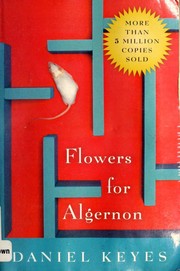
Daniel Keyes
Daniel Keyes crafted one of science fiction’s most enduring masterpieces with Flowers for Algernon, a novel that transcends genre boundaries to become a meditation on intelligence, humanity, and what it means to be human. Originally published as a short story that won the 1959 Hugo Award, Keyes expanded the narrative into a full novel that captured the 1966 Nebula Award for Best Novel—a recognition that cemented his place among science fiction’s most important voices. His willingness to explore the emotional and philosophical implications of scientific advancement, rather than simply celebrating technological progress, set him apart from much of his contemporaries.
What makes Flowers for Algernon so remarkable is its narrative structure, told entirely through the progress reports of Charlie Gordon, a man with an intellectual disability who undergoes an experimental procedure that temporarily triples his intelligence. Through Charlie’s evolving voice—from simple, phonetically spelled passages to eloquent philosophical reflection and back again—Keyes forces readers to confront their own assumptions about worth, memory, and the nature of consciousness itself. The novel’s power lies not in the science fiction premise but in its profound humanism, examining how we value and measure human life in ways that remain urgently relevant decades after its publication.