Daniel Walker Howe
Daniel Walker Howe stands as one of America’s most influential historians, known for his ability to weave together religious, political, and social history into narratives that fundamentally reshape how we understand the American past. His scholarship is characterized by meticulous research and a gift for making complex historical forces accessible to general readers—a combination that has earned him recognition at the highest levels of the profession. Howe’s work consistently explores the intersections of faith, technology, and democratic development, examining how ordinary Americans experienced and shaped the great transformations of their time.
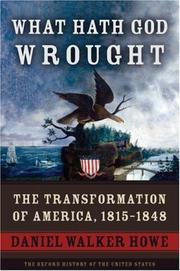
Howe’s magnum opus, What Hath God Wrought: The Transformation of America, 1815-1848, exemplifies his approach to history at its finest. The book traces how technological innovation, westward expansion, and religious revival reshaped American identity during a crucial period of national development. Its scope and insight earned the 2008 Pulitzer Prize for History, cementing Howe’s status as the definitive voice on this formative era. The title itself—drawn from Samuel Morse’s famous first telegraph message—signals Howe’s elegant way of linking technological progress with spiritual meaning, a hallmark of his interpretive style that invites readers to see American history as a deeply human story rather than merely a sequence of political events.