Diane McWhorter
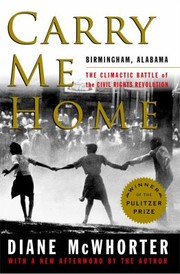
Diane McWhorter stands as one of contemporary America’s most incisive historians of the civil rights era, bringing both journalistic rigor and intimate narrative flair to her examination of racial conflict and transformation. Her magnum opus, Carry Me Home: Birmingham, Alabama, the Climactic Battle of the Civil Rights Revolution, earned the 2002 Pulitzer Prize for General Nonfiction, a recognition that underscored her extraordinary achievement in weaving together personal memoir, investigative reporting, and sweeping historical analysis. The book’s power lies in McWhorter’s ability to contextualize the Birmingham campaign of 1963—one of the pivotal moments in the civil rights movement—through the interlocking stories of the city’s residents, many of them her own family members and neighbors, creating a work that is simultaneously a historical document and a reckoning with complicity and conscience.
What distinguishes McWhorter’s approach is her willingness to excavate uncomfortable truths, including examining her own family’s role in Birmingham’s segregationist society. This self-awareness infuses her writing with a rare kind of moral complexity, avoiding the simplistic narratives that can plague historical accounts of this period. By grounding the larger movements of the civil rights revolution in the specific geography and personalities of one emblematic Southern city, she has created a model for how personal and political history can intersect in ways that illuminate both the universal and the particular. Her Pulitzer-winning work has secured her place as an essential voice in understanding how Birmingham became, as she demonstrates, the crucible in which the civil rights movement was tested and ultimately transformed American democracy.