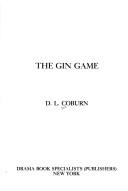
Donald L. Coburn
Donald L. Coburn emerged as a significant voice in American drama with his masterwork The Gin Game, which earned him the Pulitzer Prize for Drama in 1978. The play, a deceptively intimate two-character study, showcases Coburn’s gift for mining profound emotional truths from seemingly simple scenarios. Set in a nursing home where two residents bond over card games, The Gin Game became a landmark work that demonstrated how the most universal human experiences—loneliness, connection, competition, and the search for dignity—could unfold in confined spaces with minimal characters and maximum dramatic impact.
What makes Coburn’s achievement particularly noteworthy is his ability to blend surface-level accessibility with deeper psychological complexity. The recurring motif of the gin game itself becomes a metaphor for life’s uncertainties and the ways we struggle against fate while seeking companionship. His dialogue crackles with naturalistic precision, capturing the rhythms of real speech while building toward moments of genuine catharsis. The Gin Game proved that American drama didn’t need sprawling casts or elaborate staging to move audiences—it needed the kind of keen observation of human behavior that Coburn possessed in abundance, establishing him as a playwright of considerable craft and emotional intelligence.