Dorothy Allison
Dorothy Allison stands as one of the most unflinching voices in contemporary American literature, a writer whose work has consistently centered the lives and desires of working-class queer women with unflinching honesty and lyrical power. Her fiction pulses with the raw energy of lived experience—the violence, shame, and stubborn resilience of those pushed to society’s margins. Allison’s prose style is deceptively accessible; her sentences can be simple and direct one moment, then unexpectedly pierce the reader with emotional precision the next, a technique that has made her work both immediately engaging and deeply literary.
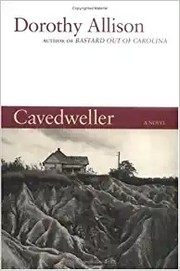
Her Lambda Literary Awards wins bracket a pivotal decade of her career. Trash: Short Stories, recognized in 1989, established Allison as a fearless chronicler of queer female experience, her interconnected stories mapping the terrain of desire, family dysfunction, and the complex bonds between women. A decade later, her novel Cavedweller won the same award in 1999, further cementing her status as one of the era’s most important voices in lesbian fiction. What makes Allison’s back-to-back recognition remarkable is how it traces her evolution from short story mastery to the emotional landscape of a full-length narrative, while maintaining her commitment to characters society often ignores.
Throughout her career, Allison has explored the intersection of class, sexuality, and trauma with a specificity that refuses easy answers or uplift narratives. She writes the South as a place of complicated belonging, and she writes desire as both survival mechanism and act of rebellion. Her work remains essential reading for anyone interested in how American literature engages with the lives of its most marginalized.
-
-
Trash: Short Stories