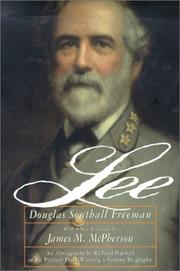
Douglas Southall Freeman
Douglas Southall Freeman stands as one of the twentieth century’s most commanding voices in American historical biography, a scholar whose meticulous research and narrative gifts transformed the way we understand the Civil War era. His masterwork R. E. Lee, which earned the 1935 Pulitzer Prize for Biography, remains a landmark achievement in biographical literature—a sweeping four-volume portrait that captures not just the military strategist but the man himself, with all his contradictions and complexities. Freeman’s approach was revolutionary for its time: he brought a journalist’s eye for human detail to a historian’s rigorous standards, creating something that read with the momentum of a novel while maintaining the authority of primary scholarship.
What distinguished Freeman’s work was his ability to weave together extensive archival research with a profound sense of narrative drama. He didn’t simply chronicle events; he reconstructed them, placing readers inside the minds and circumstances of his subjects with an immediacy that few biographers have matched. His recognition with the Pulitzer Prize validated a particular vision of American biography—one that honored both scholarly depth and literary excellence, proving that rigorous history and compelling storytelling need not be opposing forces. Freeman’s influence extended far beyond the academy, shaping how generations of readers have understood both Robert E. Lee and the larger historical moment in which he lived.