E. L. Doctorow
E. L. Doctorow stands as one of American literature’s great architects of historical consciousness, a writer who has spent five decades dismantling the boundaries between fact and fiction with surgical precision and imaginative daring. His signature approach—weaving real historical figures and events into narratives that interrogate how we construct meaning from the past—has made him essential reading for anyone interested in the possibilities of the contemporary novel. What sets Doctorow apart is not merely his technical mastery but his conviction that fiction can capture truths about historical moments that conventional histories cannot reach, a belief evident throughout his most celebrated work.
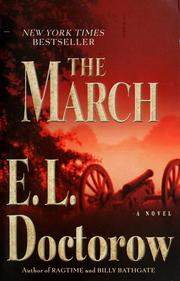
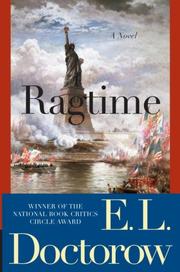
Doctorow’s shelf of major awards reflects the sustained recognition of his artistic vision across generations of readers and critics. His breakthrough novel Ragtime, which kaleidoscopically captured the fever dream of early twentieth-century America through interwoven stories of industrialists, immigrants, and cultural icons, won the National Book Critics Circle Award in 1975 and announced his arrival as a major literary force. Nearly two decades later, he demonstrated that his powers had only deepened with Billy Bathgate, his luminous gangland novel narrated by a boy entangled with Dutch Schultz, which claimed both the National Book Critics Circle Award and the PEN/Faulkner Award in 1989 and 1990. Yet perhaps most remarkably, Doctorow proved in his seventies that he had not exhausted his innovations when The March, his Civil War novel filtered through the consciousness of Sherman’s army, swept both the National Book Critics Circle Award and the PEN/Faulkner Award again in 2005 and 2006.