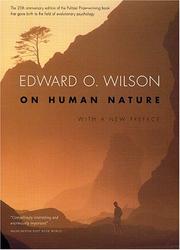
Edward O. Wilson
Edward O. Wilson stands as one of the twentieth century’s most influential naturalists and science communicators, a man who spent his life bridging the vast chasm between our understanding of insects and our understanding of ourselves. Beginning his career as a myrmecologist—an expert on ants—Wilson transformed from a specialist in insect behavior into a visionary thinker capable of synthesizing biology, evolution, and human society into sweeping new frameworks for understanding life itself. His 1979 Pulitzer Prize-winning On Human Nature exemplifies this ambition, a work that dared to apply evolutionary biology to human behavior, culture, and morality at a moment when such attempts were both intellectually daring and deeply controversial.
What distinguishes Wilson’s work is his rare gift for translating complex scientific ideas into prose that engages both the specialist and the curious reader. Whether discussing the intricate chemical languages of ants or proposing his influential concept of sociobiology, Wilson writes with the precision of a rigorous scientist and the eloquence of a naturalist poet. His Pulitzer-winning achievement demonstrates that scientific nonfiction could be both intellectually serious and accessible, a lesson that continues to shape science writing today. Across a career spanning decades, Wilson proved that our deepest questions about human nature—our origins, our social organization, our ethical systems—could be illuminated through the study of biology, if approached with both intellectual rigor and philosophical imagination.