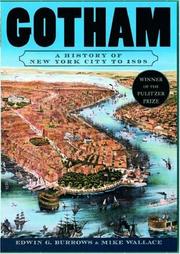
Edwin G. Burrows and Mike Wallace
Edwin G. Burrows and Mike Wallace represent a rare achievement in contemporary historical scholarship: two scholars whose collaborative work transcends the boundaries typically separating academic rigor from popular appeal. Their magnum opus, Gotham: A History of New York City to 1898, is a sprawling, meticulously researched narrative that captures the city’s evolution from a modest colonial outpost into one of the world’s great metropolises. The book’s 1999 Pulitzer Prize for History stands as testament to their ability to marry exhaustive archival work with genuinely compelling storytelling, making dense historical material accessible without sacrificing intellectual depth.
What distinguishes Burrows and Wallace’s approach is their refusal to treat New York as merely a backdrop for famous events and figures. Instead, they examine the social, economic, and cultural forces that shaped the city’s character—from its Dutch roots through the construction of the Erie Canal, from immigration patterns to the emergence of distinct neighborhoods. Their work demonstrates how a city’s history is ultimately a history of its people: laborers and merchants, enslaved people and free residents, reformers and politicians all jostling for space and influence. This democratic vision of urban history, combined with their gift for vivid detail and narrative momentum, helps explain why Gotham achieved recognition not just from the Pulitzer committee but from readers seeking to understand how cities become what they are.