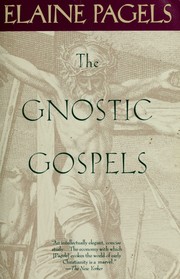
Elaine Pagels
Elaine Pagels has spent her career as a religious historian performing a peculiar kind of archaeological work—not with shovels and pottery shards, but with ancient texts that challenge our fundamental assumptions about early Christianity. Her 1979 National Book Critics Circle Award for Criticism, won for The Gnostic Gospels, announced her arrival as a scholar capable of making dense historical material accessible without diminishing its intellectual rigor. That book, which explores the recently discovered Nag Hammadi library and the Gnostic texts it contained, became a landmark work that forced scholars and general readers alike to reckon with the messy, diverse, and often contradictory origins of Christian thought.
What distinguishes Pagels’s work is her gift for narrative intimacy with the distant past. She doesn’t present history as a settled matter but as a series of choices and conflicts that shaped which ideas survived and which were suppressed. Her scholarship consistently examines how power, politics, and personality shaped theological doctrine, revealing the human stakes embedded in what we often treat as abstract doctrine. This approach—humanizing history while maintaining scholarly precision—has made her one of the most influential religious historians of the past half-century, capable of speaking equally to academic audiences and the curious general reader asking fundamental questions about faith, doubt, and what we actually know about Christianity’s earliest days.