Eleanor Cameron
Eleanor Cameron stands as one of the most significant voices in twentieth-century children’s literature, crafting imaginative worlds that honor young readers’ intelligence and capacity for wonder. Her gift lies in weaving together fantasy and realism, creating stories where the extraordinary emerges naturally from the everyday—a child might slip through a museum into another era, or discover that the most profound mysteries hide in plain sight. Cameron’s prose carries a lyrical quality, never talking down to her audience but instead inviting them into narratives rich with philosophical inquiry and emotional depth. Her work consistently explores themes of time, memory, imagination, and the ways that stories shape how we understand ourselves and the world.
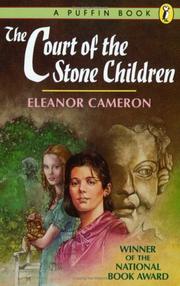
Cameron’s achievement reached its pinnacle with her 1974 National Book Award for Young People’s Literature for The Court of the Stone Children, a novel that exemplifies her mastery of the form. The book, which intertwines a contemporary girl’s life with the haunting presence of a Napoleonic-era ghost, showcases Cameron’s ability to move fluidly between timelines while excavating universal human longings—the desire to be understood, to leave a mark, to connect across the chasms of history. That this novel garnered the nation’s highest literary honor speaks to both the quality of her storytelling and the growing recognition that children’s literature deserved serious critical attention. Cameron’s career demonstrates that imaginative fiction for young people need not compromise artistry for accessibility; indeed, the two enhance each other when a writer possesses her particular vision and skill.