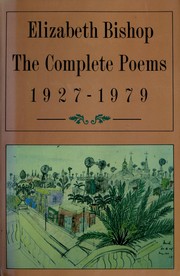
Elizabeth Bishop
Elizabeth Bishop stands as one of the most influential American poets of the twentieth century, celebrated for her ability to transform the ordinary into the profound through precise observation and luminous language. Her distinctive voice emerges from an almost scientific attention to detail—the way light falls on water, the architecture of a filling station, the mechanics of loss—combined with an emotional restraint that makes her most devastating moments land quietly but indelibly. Bishop’s life of geographic displacement, living in Nova Scotia, Brazil, and Key West among other places, infused her work with a perpetual sense of distance and wondering curiosity about the world around her.
The arc of her awards speaks to the enduring resonance of her vision. Her 1956 Pulitzer Prize for Poems: North & South – A Cold Spring established her as a major poetic voice, recognizing her gift for melding meticulous imagery with subtle emotional complexity. Fourteen years later, the 1970 National Book Award for The Complete Poems affirmed her status as a canonical figure whose body of work deepened with time. Her final major recognition came with the 1976 National Book Critics Circle Award for Geography III, a collection that found her returning to autobiographical material with the hard-won wisdom of age, proving that her powers of observation and emotional honesty remained undiminished. Across these three decades of recognition, what emerges is a poet whose influence extends far beyond her era—a writer who taught generations that poetry’s greatest truths often arrive in the form of a carefully observed heron, a piece of lost art, or the simple moment when one’s life suddenly becomes clear.