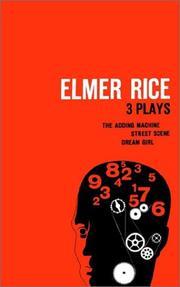
Elmer L. Rice
Elmer L. Rice stands as one of American theater’s most influential modernists, a playwright who fundamentally transformed how drama could engage with social reality. His 1929 Pulitzer Prize-winning play Street Scene exemplifies his commitment to bringing ordinary lives—the struggles of working-class New Yorkers crowded into tenement buildings—to the center of the theatrical stage. Rather than relegating such stories to the margins, Rice insisted that the domestic dramas of ordinary people possessed the same dramatic weight and universal significance as any classical tragedy, a radical proposition for American theater at the time.
What made Rice distinctive was his refusal to sentimentalize or moralize about his subjects. Street Scene unfolds with almost documentary precision, presenting the interconnected lives of a diverse urban neighborhood with sympathy but without illusion. His characters grapple with poverty, prejudice, infidelity, and the grinding indignities of city living, yet Rice captures their dignity and complexity with remarkable nuance. This humanistic approach, combined with his formally innovative stagecraft, established Rice as a crucial bridge between the realistic traditions of earlier American drama and the more experimental theatrical forms that would emerge in subsequent decades.