Emily St. John Mandel
Emily St. John Mandel has established herself as one of contemporary fiction’s most inventive voices, crafting narratives that blur the boundaries between genre and literary fiction while exploring the fragility of civilization and the resilience of human connection. Her work is marked by an elegant, crystalline prose style and an architectural precision in plotting—stories often unfold across multiple timelines and perspectives, revealing how seemingly disparate lives intersect in unexpected ways. Mandel returns again and again to questions about art, survival, and what we choose to preserve when everything else falls away.
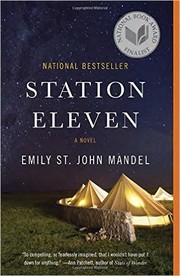
Her 2015 Arthur C. Clarke Award for Station Eleven marked a watershed moment in her career, cementing her reputation as a writer who could command both critical acclaim and a devoted readership. The novel, which traces the aftermath of a devastating flu pandemic through the interconnected lives of a traveling Shakespearean theater troupe and the people they’ve touched, became a cultural touchstone—especially prescient given its later resonance during the COVID-19 pandemic. What makes Mandel’s win particularly significant is how Station Eleven demonstrated that literary sophistication and speculative storytelling need not be opposing forces; the novel’s recognition by the science fiction establishment validated her approach of using speculative premises to examine deeply human truths about memory, meaning-making, and artistic endurance.