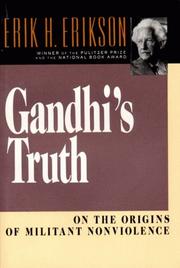
Erik H. Erikson
Erik H. Erikson stands as one of the twentieth century’s most influential thinkers, a psychoanalyst whose work fundamentally reshaped how we understand human development across the entire lifespan. Best known for his theory of psychosocial development—the framework of eight stages that trace emotional and social growth from infancy through old age—Erikson brought unprecedented nuance to the study of identity formation and the psychological crises that define our lives. His approach bridged the clinical and the philosophical, grounding abstract psychological concepts in the lived experiences of real people navigating cultural and historical contexts.
Erikson’s 1970 Pulitzer Prize for General Nonfiction, awarded for Gandhi’s Truth, exemplifies his distinctive method of combining rigorous psychological analysis with biography and cultural history. In this landmark work, he applied his developmental theories to examine Mahatma Gandhi’s life, exploring how personal psychology and historical moment intersect to produce transformative leadership. The book’s acclaim reflects Erikson’s rare ability to make complex psychological insight accessible while maintaining scholarly rigor, demonstrating that psychoanalysis could illuminate not just individual pathology but the deepest patterns of human meaning-making and moral development.
Throughout his career, Erikson’s preoccupation with identity—how we construct it, how it shifts, how social forces shape it—gave coherence to his prolific output across psychoanalysis, biography, and social commentary. His willingness to venture beyond the consulting room into history, politics, and ethics established him as an intellectual whose frameworks remain essential to anyone seeking to understand what drives human behavior and historical change.