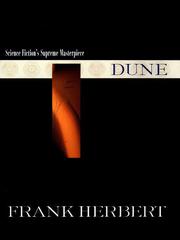
Frank Herbert
Frank Herbert stands as one of science fiction’s most towering figures, an author who elevated the genre far beyond space opera spectacle into the realm of serious philosophical and political inquiry. His masterwork Dune, published in 1965, announced his arrival as a visionary force in speculative fiction and immediately captured the imagination of both critics and readers. The novel’s sweep was unprecedented—a sprawling desert world teeming with religious intrigue, ecological complexity, and the corrupting nature of power. That Dune won both the Nebula Award for Best Novel in 1965 and the Hugo Award for Best Novel in 1966 underscored something remarkable: here was a work that achieved both critical prestige and the affection of science fiction’s devoted fan communities, a rare dual victory that signaled a seismic shift in what the genre could accomplish.
Herbert’s distinctive strength lay in his refusal to treat science fiction as mere entertainment. He wove together hard scientific speculation with intricate worldbuilding, creating universes governed by internal logic so rigorous they felt inevitable rather than invented. His recurring preoccupations—the dangers of messianic thinking, the relationship between ecology and survival, the question of how power shapes human consciousness—gave his work a thematic depth that resonated across readers of wildly different temperaments. Dune became not just a novel but a cultural touchstone, spawning a sprawling universe of sequels and cementing Herbert’s reputation as an architect of possibilities, an author who understood that the best science fiction uses the strangeness of imagined worlds to illuminate the truths of our own.