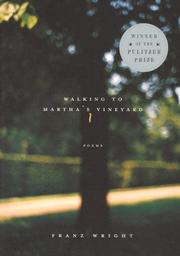
Franz Wright
Franz Wright is a poet of profound spiritual searching and emotional rawness, known for his unflinching examinations of addiction, recovery, faith, and family legacy. His work combines lyrical beauty with devastating honesty, creating poems that feel like overheard confessions from someone who has stared into the abyss and returned to tell about it. Wright’s influence on contemporary American poetry extends beyond his individual collections to shape how poets approach the intersection of personal breakdown and transcendence. His father, James Wright, was himself a celebrated poet, yet Franz carved out his own distinctive voice—one marked by fragmented syntax, spiritual yearning, and the kind of vulnerability that transforms private anguish into universal resonance.
In 2004, Wright’s collection Walking to Martha’s Vineyard won the Pulitzer Prize for Poetry, a recognition that underscored both the accessibility and depth of his vision. The award validated what careful readers had long recognized: that Wright’s apparent simplicity of language masks a complex architecture of meaning, and that his spiritual and psychological preoccupations speak to something fundamental about suffering and redemption in contemporary life. The Pulitzer brought broader attention to a poet whose entire career had been devoted to the difficult work of transformation—turning the raw material of lived experience into language that refuses easy comfort but offers genuine consolation.