Geoffrey A. Landis
Geoffrey A. Landis represents a rare breed in science fiction: a working scientist whose fiction rivals his research credentials. As a physicist at NASA’s Glenn Research Center, Landis brings authentic technical rigor to his storytelling, creating narratives that explore the intersection of hard science and human experience with remarkable precision. His work consistently grapples with the physics of space exploration and the philosophical implications of humanity’s reach beyond Earth, rendered in prose that makes complex concepts feel both intellectually satisfying and emotionally resonant.
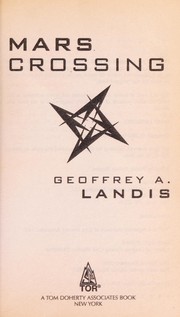
Landis has earned recognition across science fiction’s most prestigious awards, demonstrating exceptional range across multiple forms. His short fiction has been particularly celebrated, winning the Hugo Award twice—first for “A Walk in the Sun” in 1992 and again for “Falling onto Mars” in 2003—while also claiming the Nebula Award for “Ripples in the Dirac Sea” in 1989. His transition to novels proved equally successful, with Mars Crossing earning the Locus Award for Best First Novel in 2001, a particularly noteworthy achievement for an author whose reputation was already firmly established in shorter forms. This cross-award recognition speaks to his ability to sustain compelling narratives regardless of length, while his Martian-focused work reveals a thematic obsession that has deepened throughout his career, exploring what it means to survive, build, and ultimately belong on another world.
-
Falling onto Mars
-
-
-
Ripples in the Dirac Sea