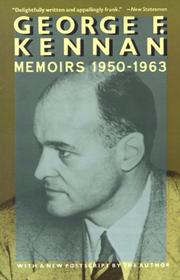
George F. Kennan
George F. Kennan stands as one of the twentieth century’s most influential intellectual figures, equally at home as a diplomat, historian, and strategic thinker. His career spanned decades of Cold War statecraft, during which his famous “containment” doctrine shaped American foreign policy, yet his scholarly ambitions were equally formidable. Kennan possessed a rare gift for combining rigorous historical analysis with penetrating geopolitical insight, producing work that was both immediately relevant to policymakers and built to endure as serious history.
Kennan’s scholarly achievements received the highest recognition from the Pulitzer Prize committee, which honored two of his major works in consecutive decades. His 1957 Pulitzer for History recognized Russia Leaves the War: Soviet-American Relations, 1917-1920, a meticulously researched examination of the critical early years of Soviet-American relations. More than a decade later, his Memoirs claimed the 1968 Pulitzer Prize for Biography, cementing his reputation as a writer capable of rendering his own extraordinary life with the same analytical clarity and narrative grace he brought to historical subjects. These consecutive wins underscore something distinctive about Kennan’s career: he was neither purely a man of action nor purely a man of letters, but rather someone for whom scholarship and experience deepened each other, each lending credibility and depth to the other’s insights.