George Turner
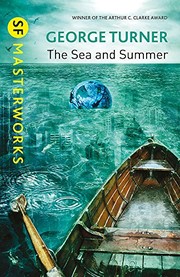
George Turner stands as one of science fiction’s most intellectually ambitious voices, a writer who wielded the genre’s speculative power to interrogate the social and environmental crises of his era. His 1988 Arthur C. Clarke Award–winning novel The Sea and Summer exemplifies his signature approach: grounded, meticulously researched storytelling that uses near-future scenarios to examine how climate change, class division, and technological disruption reshape human society. Rather than favoring the pyrotechnics of hard sci-fi, Turner constructed narratives that felt urgent and plausible, grounding speculative premises in careful extrapolation from observable trends.
What distinguished Turner’s work was his refusal to let spectacle overshadow substance. The Sea and Summer, set in a flooded Melbourne of the future, isn’t a tale of adventure in rising waters but a sober exploration of how environmental catastrophe exacerbates inequality and fractures communities. Turner’s recognition by the Clarke Award—one of science fiction’s most prestigious honors—reflected his standing among readers and critics who valued science fiction as a tool for social thought. His career demonstrated that the genre could be simultaneously intellectually rigorous and deeply human, using imaginative scenarios to ask urgent questions about the world we inhabit rather than escape it.