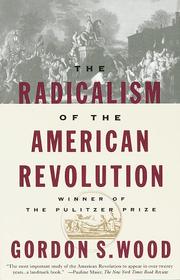
Gordon S. Wood
Gordon S. Wood stands as one of America’s most influential historians, reshaping how scholars and general readers understand the founding era and the ideological forces that transformed the colonies into a revolutionary nation. His magnum opus, The Radicalism of the American Revolution, earned the Pulitzer Prize for History in 1993, cementing a career devoted to uncovering the radical social and intellectual currents beneath the surface of conventional Revolutionary narratives. Rather than treating the American Revolution as a straightforward political break from Britain, Wood demonstrated how it fundamentally disrupted social hierarchies, redistributed power, and unleashed democratic impulses that would reverberate through American life for centuries.
Wood’s scholarly approach has been distinguished by his ability to synthesize intellectual history with social analysis, examining how Enlightenment ideas filtered through colonial society and combusted into revolutionary action. His work insists that the Revolution was far more destabilizing and transformative than many accounts suggest—less a conservative defense of existing liberties and more a radical reimagining of human possibility. The Pulitzer recognition validated Wood’s decades of meticulous research and his gift for making complex historical arguments accessible without sacrificing intellectual rigor, establishing him as an essential voice for anyone seeking to understand the ideological DNA of the American founding.