Greg Bear
Greg Bear stands among science fiction’s most versatile and intellectually ambitious voices, a writer equally comfortable exploring the vast scales of galactic conflict and the intimate dimensions of biological transformation. His career has been defined by an ability to ground speculative premises in rigorous scientific thinking, whether examining the nature of consciousness in artificial intelligences or tracing the evolutionary implications of ancient viral sequences. This combination of scientific rigor and philosophical curiosity has earned him recognition across virtually every major science fiction award, with both the Hugo and Nebula Awards acknowledging his work repeatedly across multiple categories and decades.
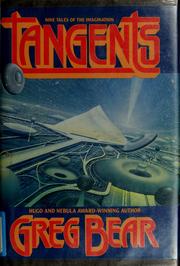
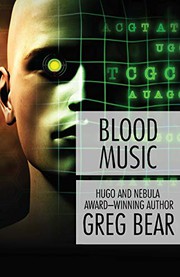
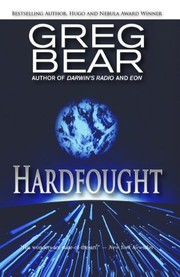
Bear’s early breakthrough came in the 1980s with a remarkable string of shorter works that demonstrated his range and technical precision. “Blood Music,” a novella that explores the transformation of human consciousness through engineered cells, captured both the 1983 Nebula Award for Best Novelette and the 1984 Hugo Award for Best Novelette—a dual recognition that signaled his arrival as a major talent. He followed this with “Hardfought,” which won the 1983 Nebula Award for Best Novella, and “Tangents,” which earned both the 1986 Nebula Award and 1987 Hugo Award for Best Short Story, showcasing an artist equally skilled at intricate world-building and perfectly calibrated narrative compression.
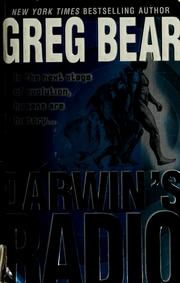
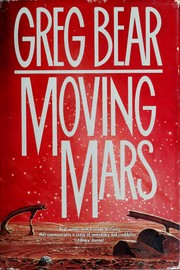
Bear’s achievement extended into novel-length work with equal distinction. “Moving Mars,” his 1994 Nebula Award winner, and “Darwin’s Radio,” which claimed the 2000 Nebula Award, demonstrated his ability to sustain complex speculative premises across broader canvases, exploring themes of human adaptation, planetary colonization, and the hidden histories written in our genetic code. His multi-award recognition across decades reflects not merely consistent excellence but an evolution as a thinker grappling with how science reshapes human meaning and identity.