Haruki Murakami
Haruki Murakami has spent decades crafting a singular literary universe where the mundane and the surreal collide with such seamless precision that readers often can’t tell where dreams end and reality begins. The Japanese author’s distinctive voice—marked by spare, meditative prose and a wry deadpan humor—has made him one of the most widely read novelists of the 21st century, transcending the traditional boundaries between “literary” and “popular” fiction. His work often explores themes of loneliness, memory, and the search for connection in an increasingly disconnected world, populated by characters who find themselves inexplicably drawn into uncanny situations they struggle to understand or escape.
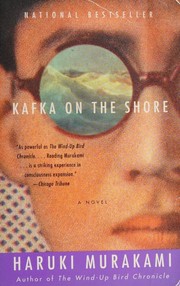
His masterwork Kafka on the Shore stands as a defining achievement in contemporary fiction, earning the World Fantasy Award for Best Novel in 2006. The novel exemplifies everything that makes Murakami’s fiction so compelling: a fractured dual narrative that loops through time and parallel realities, a protagonist on a mysterious journey of self-discovery, and that signature blend of intimate psychological realism with moments of genuine strangeness. The international recognition of Kafka on the Shore reflected what readers worldwide had already discovered—that Murakami’s explorations of isolation and yearning, grounded in his precise and almost musical prose style, speak to something deeply human beneath their fantastical surfaces.