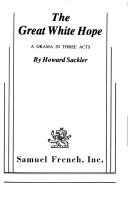
Howard Sackler
Howard Sackler stands as a pivotal figure in American drama, best known for his landmark play The Great White Hope, which won the Pulitzer Prize for Drama in 1969. The play, which also became a major motion picture, brought Sackler’s unflinching examination of race, celebrity, and power to national attention during a turbulent era of American racial reckoning. His story of Jack Jefferson, a Black heavyweight boxer in the early twentieth century, resonated far beyond the theater, capturing the visceral tension between individual ambition and systemic oppression with a directness that audiences and critics found both challenging and essential.
Sackler’s dramatic sensibility was characterized by his willingness to tackle uncomfortable historical truths through the prism of compelling human conflict. The Great White Hope demonstrated his gift for transforming period detail and social commentary into gripping theater, without sacrificing psychological complexity or moral ambiguity. His Pulitzer recognition marked a significant moment in American drama, validating the kind of politically engaged, historically conscious playwriting that would influence generations of writers committed to using theater as a lens for examining America’s racial and social contradictions.