Hugh Lofting
Hugh Lofting stands as a pioneering figure in children’s literature who fundamentally transformed how stories could speak to young readers. Born in Britain but finding his literary voice partly through his experiences as an engineer in World War I, Lofting possessed an unusual ability to construct fantastical worlds that operated by their own rigorous internal logic—worlds where animals could talk not as mere whimsy, but as a natural extension of imagination taken seriously. His most famous creation, Doctor Dolittle, emerged from letters he wrote to his children during the war, transforming personal correspondence into the foundation of a beloved literary character who would endure for generations.
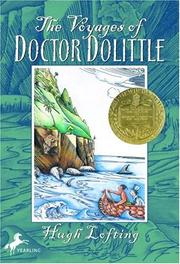
The Voyages of Doctor Dolittle earned Lofting the Newbery Medal in 1923, a recognition that validated his approach to children’s fiction at a crucial moment in the field’s development. The novel’s exploration of a compassionate physician who abandons human practice to communicate with and treat animals spoke to something deeper than simple adventure—it reflected Lofting’s own values regarding empathy, friendship across differences, and the intrinsic worth of all living creatures. This thematic richness, combined with his inventive plotting and distinctive narrative voice, established Lofting as a master of the children’s novel during a formative period when such works were just beginning to receive serious critical and institutional recognition.